



Place and merge matching dragons to create stronger defenders, then use them to stop incoming knights before they overwhelm your lanes.
Merge Dragons vs Knights
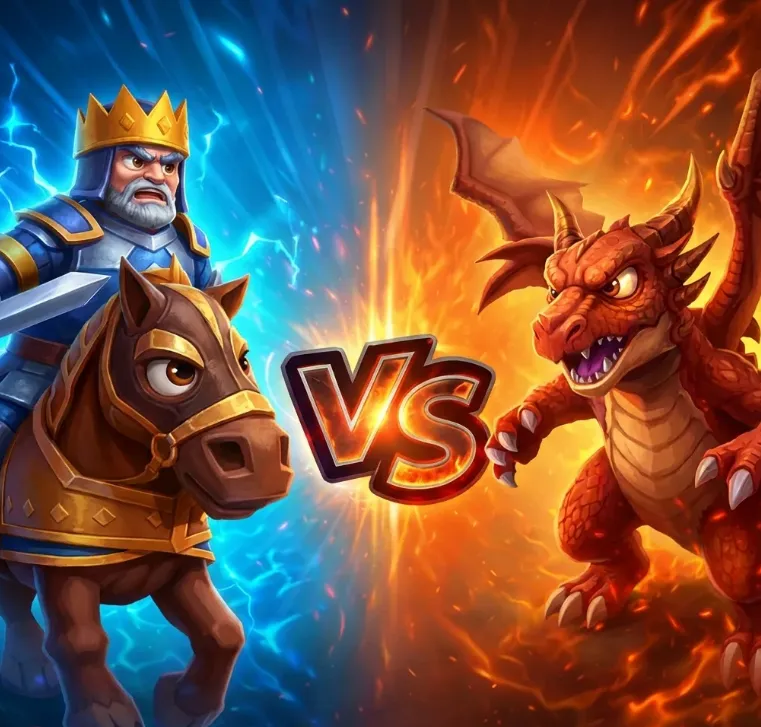
At first it looks simple: a few small dragons, a tidy battlefield, and knights marching in neat lines as if they’ve already decided how this ends. Then the board starts tightening. One merge opens space but delays damage. Another creates a stronger dragon, yet leaves one lane feeling thinner than it should. That quiet pressure is where the game becomes interesting. You aren’t just combining pieces for the pleasure of seeing bigger numbers appear. You’re trading tempo for strength, gambling that a better dragon now will matter more than immediate coverage a second ago. Some enemy pushes feel manageable until a heavier knight slips through behind the front line and suddenly your earlier merge decision starts echoing back at you. The satisfying part is that improvement feels visible. A sloppy board gradually turns into a cleaner formation, stronger dragons begin deleting targets before they can bunch up, and what first felt reactive becomes surprisingly controlled. Beneath the bright fantasy art, there’s a measured loop of placement, merging, and battlefield reading that keeps each wave from feeling disposable.
The core mechanic is easy to read but more tactical than it first appears. Merging dragons is not only a power upgrade; it also changes board density, attack coverage, and how much short-term pressure you can absorb. Knights arrive with different durability levels and movement rhythms, which means the best merge is not always the fastest one. Sometimes keeping multiple weaker units buys more control than rushing into a larger form too early.
From a pacing perspective, the game steadily teaches restraint. Early waves let you experiment with combinations and board flow. Later encounters punish random merging and reward players who recognize when to preserve lane coverage, when to consolidate force, and when to let a smaller dragon keep working instead of chasing a bigger unit immediately.
Merge Dragons vs Knights – Merge Strategy Guide
Merge timing, lane pressure, and dragon upgrades turn every clash into a smart little war. Each successful merge changes both your damage potential and the structure of your defensive setup.
Merge Dragons vs Knights blends fantasy battlefield management with quick unit combination decisions, defensive pressure, and escalating enemy waves. Players build stronger dragon forces by merging matching units, then use that growing power to hold back armored knights pushing across the field. For anyone looking for merge battle gameplay, castle defense tension, and upgrade-driven strategy, this game delivers fast decisions with a satisfying progression curve.
🐉 Dragon Merge Breakdown
Merging identical dragons creates stronger units, but every upgrade also changes how safely your lanes are covered.
Short sessions are easy to grasp, yet repeated runs reveal deeper timing choices in how units are combined.
🐉 Core Merge Systems
🐉 Meaningful Dragon Fusion
Merged units become noticeably stronger, making every upgrade feel useful on the battlefield.
🛡️ Lane-Based Defense Pressure
Advancing knight waves force players to think about coverage, timing, and short-term survival.
🎮 Readable Tactical Flow
Clear enemy movement and simple board logic make smart decisions easier to recognize and improve.
🐉 Build The First Dragon Line
🎮 Merge And Battle Controls
Mouse / Touch: Select and drag dragons
Drop matching units together to merge
Tap available board spaces to place new units
💡 Smart Merge Tips
1. Keep lane coverage before chasing bigger upgrades
2. Merge only when the timing will not expose a weak side
3. Watch which lane is receiving the heaviest knight pressure
4. Use empty board space carefully so you do not trap your setup
5. Let working units stay active if the board is already stable
❌ Common Merge Errors
1. Combining units too early and losing coverage
2. Ignoring one lane while focusing on another
3. Filling the board without a plan
4. Chasing stronger dragons at the wrong moment
5. Waiting too long to react to stacked knight waves
📊 Wave Progression
Early waves introduce basic knight pressure and simple merge choices. Mid-game battles ask for better board organization and more careful lane coverage. Later waves escalate with tougher enemies and faster pressure, making every merge decision feel more important.
🧠 Merge Defense Strategy
Think in layers: protect active lanes, merge when it improves your long-term board, and avoid weakening the front line for a short burst of power. Strong runs come from controlled upgrades rather than panic decisions.
🎉 Why It Feels Rewarding
It turns a simple merge idea into a satisfying defense loop where every upgraded dragon changes the pace of battle, making victories feel earned through timing and smart board control.
👥 Recommended Players
Great for players who enjoy merge mechanics, fantasy defense games, and light strategy experiences built around quick but meaningful decisions.
💻 System Compatibility
Playable on current web browsers across desktop, tablet, and mobile devices with responsive controls and no complicated installation process.
❓ Common Questions
Q1: Is Merge Dragons vs Knights free to play?
Yes, the game is completely free and can be started right away without a lengthy setup.
Q2: Can I play on mobile devices?
Yes, it works smoothly on phones, tablets, and desktop systems.
Q3: Do merges matter that much?
Absolutely. Merging at the right moment can completely change your damage output and lane stability.
Q4: How long does a session last?
Most sessions are short and easy to fit into quick breaks, though longer runs depend on how well you manage later waves.
Q5: Is there any strategy beyond matching dragons?
Yes, board space, lane coverage, and enemy timing matter just as much as creating stronger units.
Q6: What makes the battles satisfying?
The game makes small decisions feel meaningful, especially when a well-timed merge turns a weak defense into a clean counter.
▶ PLAY NOW